 EduDoc Vault
De-Escalation & Crisis Incident Toolkit
Built for administrators, counselors, and classroom staff who have to document incidents after a hard moment. The incident sheet captures only what was seen and heard — sequence, actions taken, injuries, who was notified and when — and the toolkit pairs it with a proactive de-escalation plan you complete before the next incident, not after.
What's inside
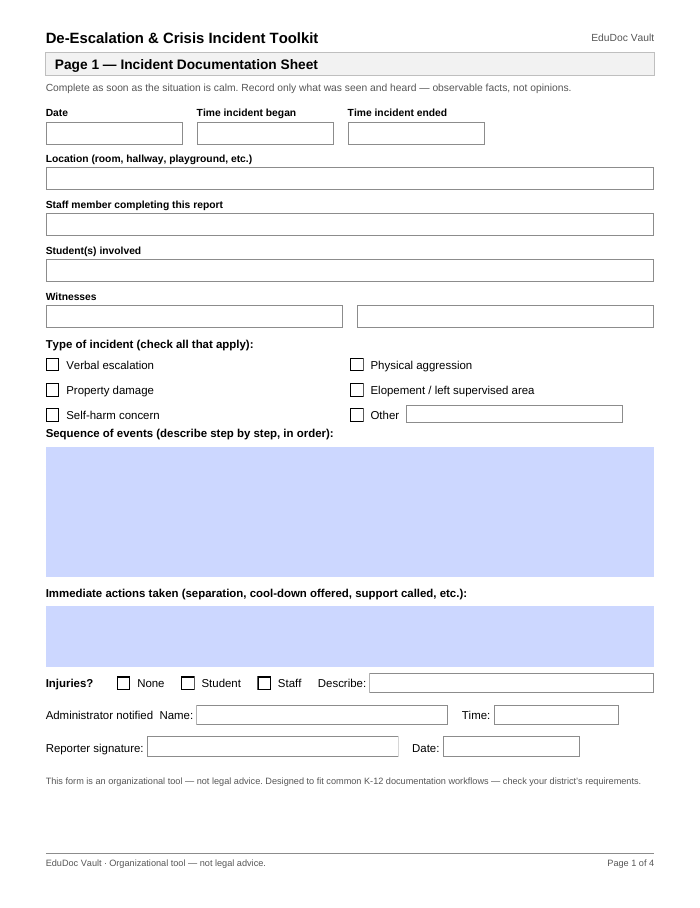
- Page 1 — Incident documentation sheet. Date, start/end times, location, witnesses, incident type checkboxes, the step-by-step sequence, immediate actions, injuries, and administrator notification — observable facts only, completed while details are fresh.
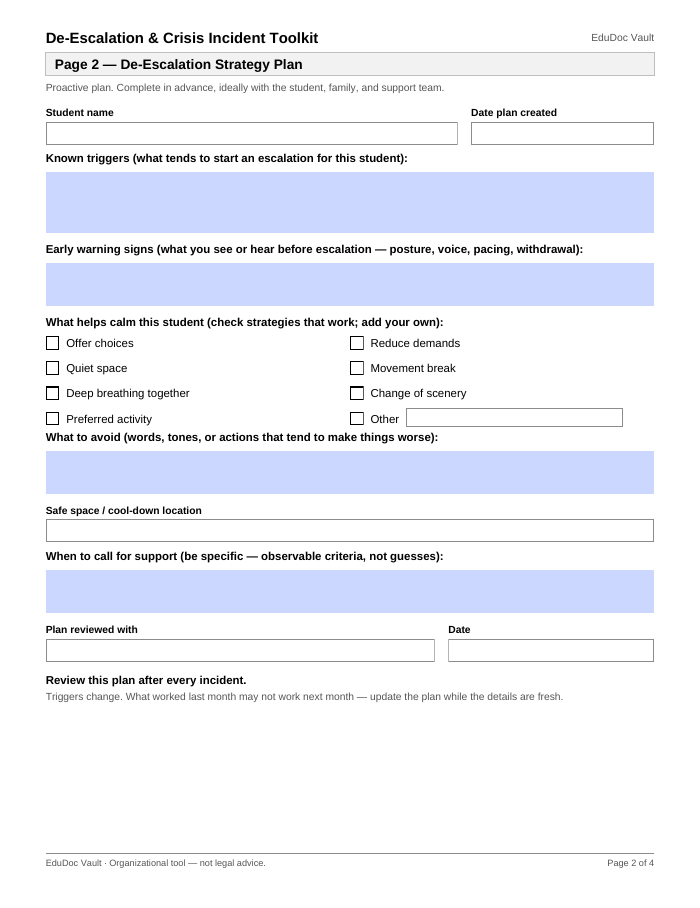
- Page 2 — De-escalation strategy plan. The proactive page: known triggers, early warning signs, strategies that help this student, what to avoid, the cool-down location, and specific criteria for calling support. Reviewed after every incident.
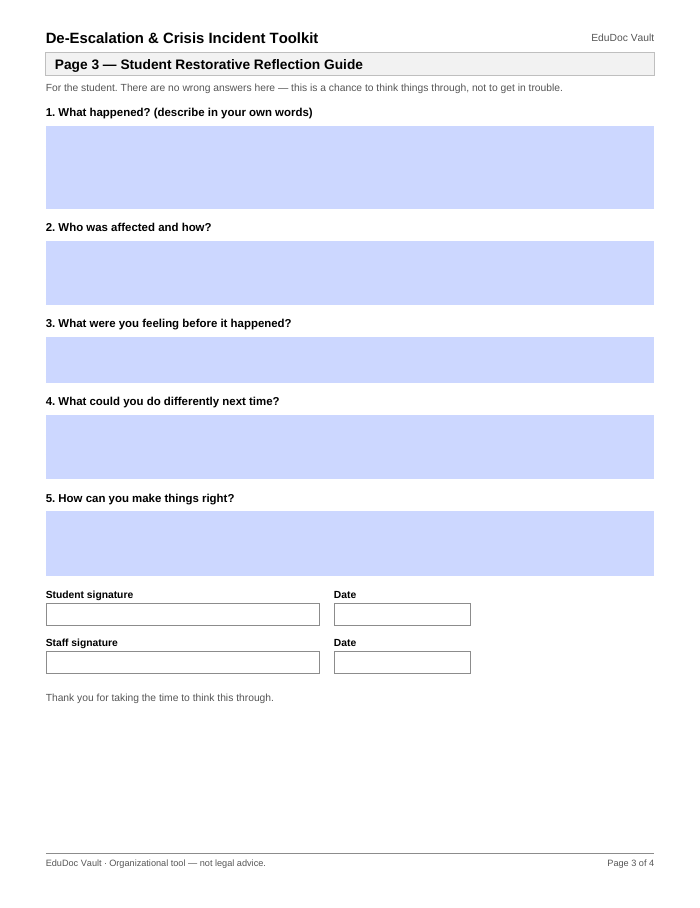
- Page 3 — Student restorative reflection guide. Four prompts in the student's own words: what happened, who was affected, and how to repair it — framed as thinking it through, not getting in trouble.
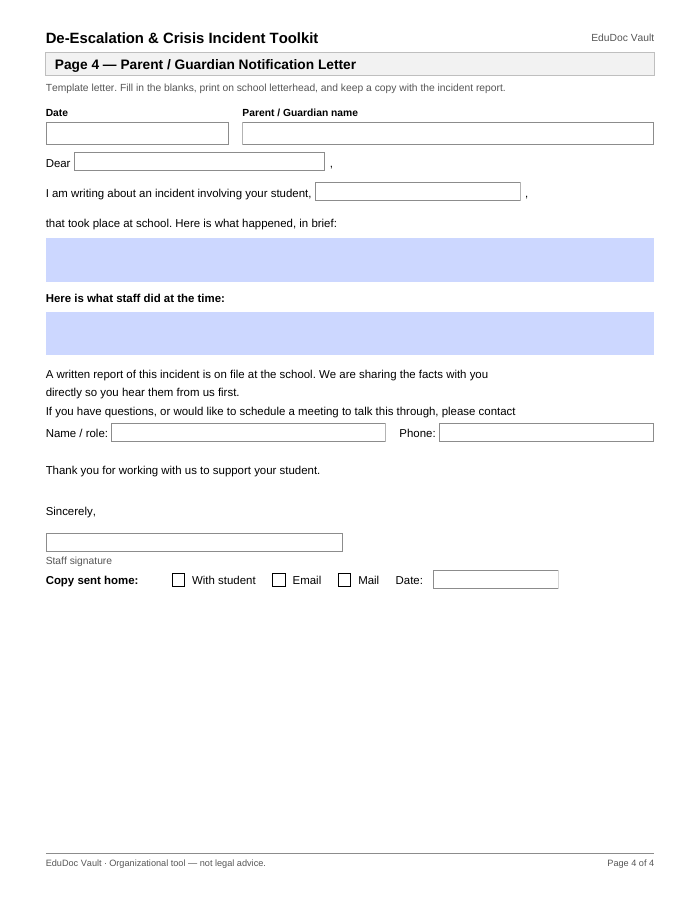
- Page 4 — Parent/guardian notification letter. A fill-in template that tells the family what happened and what staff did, so they hear the facts from the school first — print on letterhead and file a copy with the report.
Look inside — every page
These are the actual pages of the PDF you receive, rendered straight from the delivered file.
The old way vs. this toolkit
| Task | Paper & memory | With this toolkit |
|---|---|---|
| Writing up an incident | From memory, days later, mixed with opinion | A structured same-day sheet that prompts for observable facts only |
| Preventing the next one | Hoping it doesn't happen again | A written de-escalation plan — triggers, warning signs, what works — reviewed after every incident |
| The student's side | A consequence and a closed door | A guided reflection on what happened and how to repair it |
| Telling the family | They hear a version from someone else first | A notification letter that puts the school's facts in their hands |
Questions about this toolkit
When should the incident sheet be completed?
As soon as the situation is calm, while the sequence is still fresh. The form's first instruction is deliberate: record only what was seen and heard — observable facts, not opinions or labels.
What is the de-escalation plan page for, if the incident already happened?
It's the proactive half of the toolkit — completed in advance, ideally with the student, family, and support team. It documents triggers, early warning signs, strategies that help, and the specific point at which to call for support, and the form prompts you to review it after every incident because triggers change.
Does it include parent notification?
Yes — page 4 is a fill-in letter template covering what happened and what staff did, with a sent-home tracking line (with student, email, or mail, plus the date) so the notification itself is documented.
Is this an official incident report or legal advice?
Neither. It is an organizational tool designed to fit common K-12 documentation workflows — check your district's requirements, and file your district's official incident report wherever one is required. This toolkit is not legal advice.